
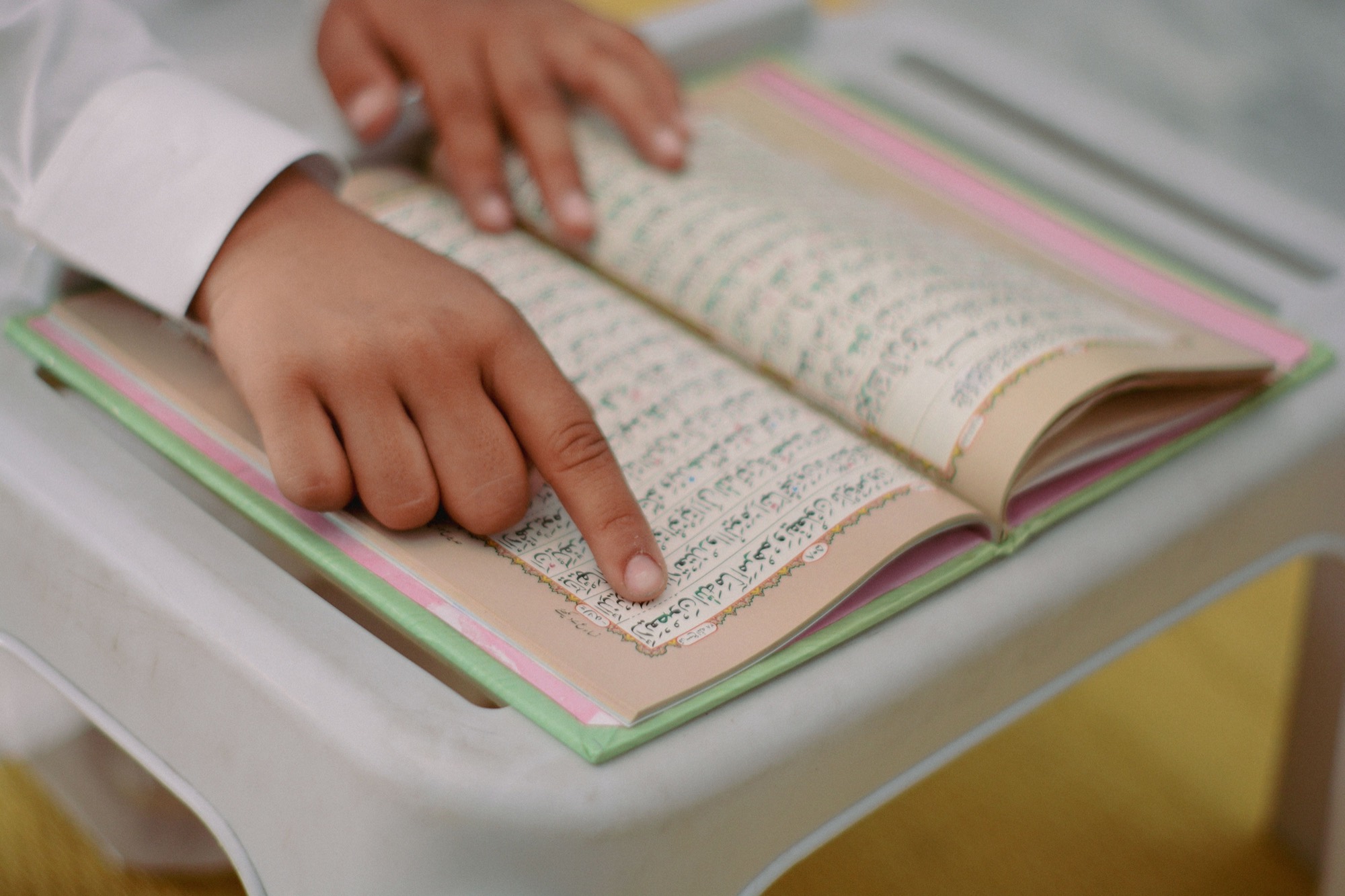
How Parents Can Help Children Memorize the Qur'an
A practical guide for parents: how to support your child's hifz without pressure, build a routine that lasts, handle resistance, and avoid the mistakes that make kids resent memorization.
Almost every parent who wants their child to memorize the Qur'an runs into the same wall: you know it matters, but you don't know how to help without turning it into a fight.
Push too hard and your child starts dreading the mushaf. Stay too hands-off and nothing happens. Somewhere in between is a role that actually works — and it's probably not the one you think.
Here's what that role looks like in practice.
Your job is the environment, not the teaching
This is the single most useful shift a parent can make.
You don't need to be a qualified teacher. You don't need to correct every letter. Most parents who try to become their child's ustadh end up in a power struggle that damages both the hifz and the relationship.
What your child actually needs from you:
- A consistent time and place where memorization happens
- Someone who is genuinely interested in what they memorized today
- Protection from interruptions during that window
- Emotional steadiness when progress is slow
Teaching can be outsourced to a teacher, a class, or a tool. The environment cannot. That's your contribution, and it's the one that determines whether hifz survives the first hard month.
Start before the memorizing starts
If your child is young — three, four, five — formal hifz can wait. But this period isn't wasted time; it's where the foundation gets built.
- Play recitation at home. In the car, during breakfast, while tidying up. Children absorb rhythm and pronunciation long before they consciously memorize anything.
- Pick one reciter and stay with them. Familiarity matters enormously for young children. Constantly switching voices makes the Qur'an feel like unfamiliar background noise.
- Let them hear you recite. A child who never sees a parent with a mushaf learns that the Qur'an is something other people do.
- Teach short surahs conversationally. Not as lessons — just as things you say together at bedtime.
Children who arrive at formal hifz with the sound of the Qur'an already in their ears memorize noticeably faster.
Build a routine that survives bad days
The routine is what carries hifz through the weeks when nobody feels motivated. A good one has three properties: it's short, it's anchored to something that already happens, and it's the same every day.
Anchor it to an existing habit. "After Fajr" or "right after breakfast, before screens" works. "Sometime in the evening" does not — evenings collapse.
Keep it genuinely short. For most children:
- Ages 5–7: 10–15 minutes
- Ages 8–11: 20–30 minutes
- Ages 12+: 30–45 minutes
If your child is regularly in tears, the session is too long — regardless of what any schedule says.
Split new memorization from review. Roughly one third on new lines, two thirds on what's already memorized. Parents almost always get this backwards, which is why children lose pages as fast as they gain them.
Always end on something they can do. Finish with a surah they know cold. Ending on success is what makes them willing to come back tomorrow.
Make review the non-negotiable part
Here is the hard truth most families discover six months in: the child who memorized ten surahs and reviewed none of them has, functionally, memorized nothing.
New pages are exciting. Review is boring. So review is what gets skipped, and then one day your child can't recite something they "finished" three months ago — and both of you feel like the effort was wasted.
Protect review the way you protect the new lesson:
- Every day, have them recite something old from memory, out loud, without looking.
- Rotate through everything they've memorized on a cycle, so no surah goes untouched for long.
- When a surah gets shaky, move it back into daily rotation until it's solid again.
The principle is the same one adults use — see how to memorize the Qur'an without forgetting for the full system.
Handle pronunciation early, before it sets
Children memorize exactly what they hear, mistakes included. A word learned wrong at age seven is still wrong at seventeen, and it is far harder to fix then than to get right now.
If you can't correct tajweed yourself — and most parents can't, which is completely normal — make sure something else is doing it:
- A teacher who listens regularly
- A halaqah or class
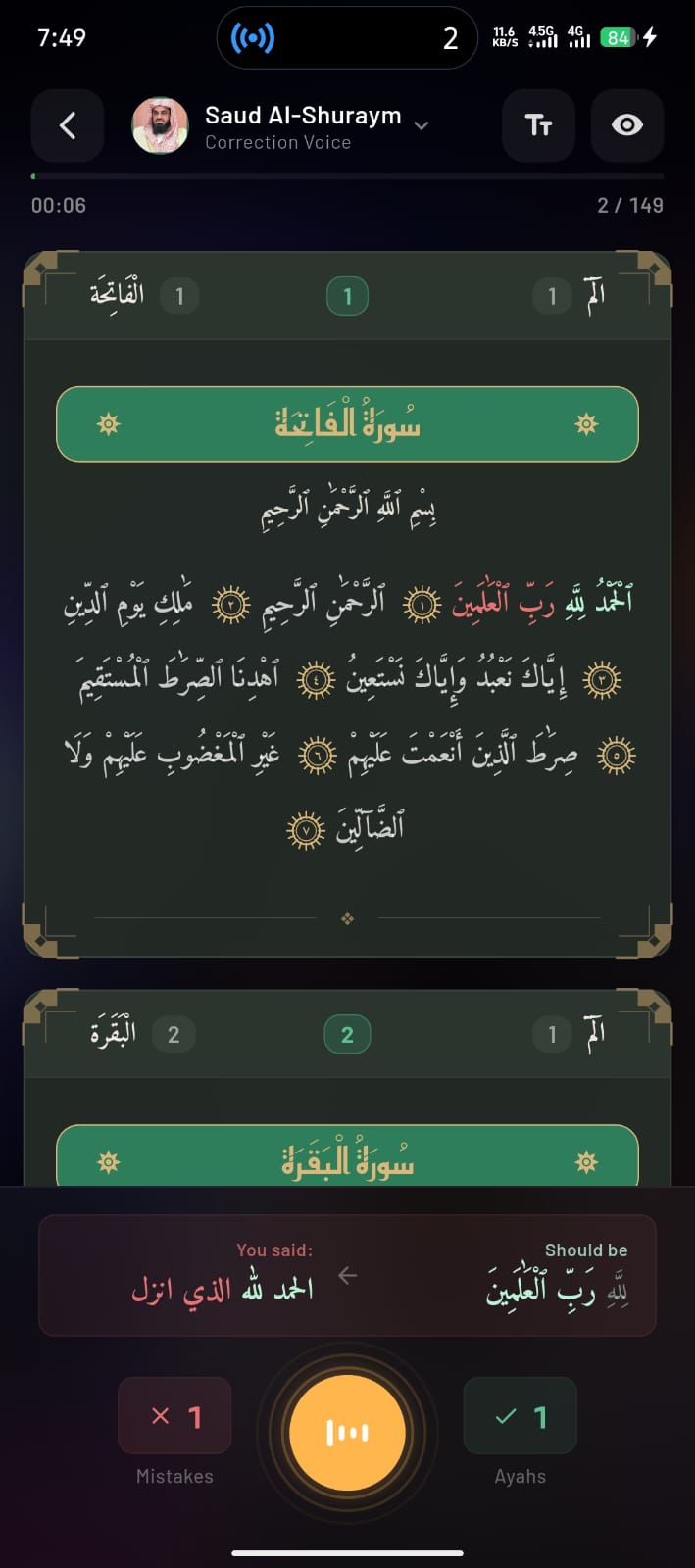
- An app that catches errors as they recite
What doesn't work is hoping it sorts itself out. It doesn't.
This is often the gap in home hifz: parents can supervise, but can't correct. Hufaaz helps by listening while your child recites out loud, flagging the exact word they got wrong, and playing it back correctly in a Qari's voice they enjoy imitating. It keeps corrections patient and consistent — and it means you don't have to be the one saying "no, again."
What to do when your child resists
Resistance is normal. Nearly every child pushes back at some point. How you respond determines whether it's a phase or a permanent association.
Find out what kind of resistance it is. Boredom, difficulty, tiredness, and a bad experience with a teacher all look the same from outside but need different responses. Ask, and actually listen.
Shrink the session before you abandon it. Five honest minutes daily beats a suspended routine. Reduce, don't stop.
Change the format, not the goal. Recite while walking. Take turns verse by verse. Let them recite to a grandparent on a call. Same memorization, different feeling.
Never use the Qur'an as punishment. No extra pages for bad behaviour, no memorization as a consequence. This is the fastest way to build a lifelong negative association, and it is remarkably hard to undo.
Let a hard day be a hard day. One skipped session doesn't break anything. Insisting through genuine exhaustion can.
Praise the effort, not the talent
How you praise shapes how your child responds to difficulty.
"You're so smart, mashaAllah" teaches a child that success comes from a fixed quality they either have or don't. When something gets hard, they conclude they've hit their limit.
"You worked hard on that one" teaches that effort is what produces results. Those children keep going when verses get difficult.
Concretely:
- "You didn't give up on that verse" — good
- "You've got an amazing memory" — less good
- "You showed up every day this week" — best
Celebrate consistency and milestones. Finishing a surah deserves acknowledgement. So does thirty days without missing a session.
Common mistakes parents make
- Comparing to other children. "Your cousin finished Juz Amma already" is demotivating every single time, with no exceptions.
- Prioritizing speed over accuracy. A quickly memorized page with broken tajweed costs more time later than doing it slowly now.
- Doing all new memorization, no review. The most common failure mode in home hifz.
- Inconsistent scheduling. Three sessions one week, none the next. Children need rhythm more than volume.
- Making it the only thing you ask about. If every conversation is "did you do your hifz," the Qur'an becomes a source of pressure rather than comfort.
- Giving up during a plateau. Progress in hifz is not linear. Flat stretches are normal and temporary.
Frequently asked questions
What age should my child start formal hifz? Usually around 6–10, but readiness matters more than age — can they sit for 10–15 minutes and are they reading Arabic letters? See the best age to start hifz for kids for a fuller answer.
I don't know Arabic. Can I still help? Absolutely. Your role is environment, routine, and encouragement — none of which require Arabic. Pair that with a teacher or tool that handles correction, and you've covered everything that matters.
How long should a daily session be? Start at 10–15 minutes for young children and grow slowly. Length matters far less than daily-ness. A short session every day beats a long one twice a week, every time.
My child memorizes then forgets everything. What am I doing wrong? Almost certainly too much new material and not enough review. Shift to roughly one third new, two thirds review, and the forgetting largely resolves itself.
Should I use rewards? Small ones tied to effort and consistency are fine — a special outing after thirty days of showing up. Avoid large rewards tied to volume, which encourage rushing and can shift the motivation away from the Qur'an itself.
What if we fall behind the class or the schedule? Adjust the schedule, not the child. A pace that produces daily tears isn't working, no matter what the plan said. Steady progress at a slower pace finishes; unsustainable pressure doesn't.
Should my child memorize with meaning? Age-appropriate meaning helps a lot, especially for older children — it makes verses stick and makes the Qur'an feel alive rather than abstract. A sentence or two about what a surah is about is plenty for young children.
Your child does not need you to be their Qur'an teacher. They need you to build the conditions where memorization can happen: a steady time, a calm atmosphere, honest review, correct pronunciation, and a parent who is interested rather than anxious.
Do that consistently, and hifz stops being a battle and becomes part of how your family lives.
If you'd like a patient, encouraging companion for your child's daily practice — one that listens, corrects kindly in a Qari's voice, and keeps their revision on track — Hufaaz is free on Google Play.