
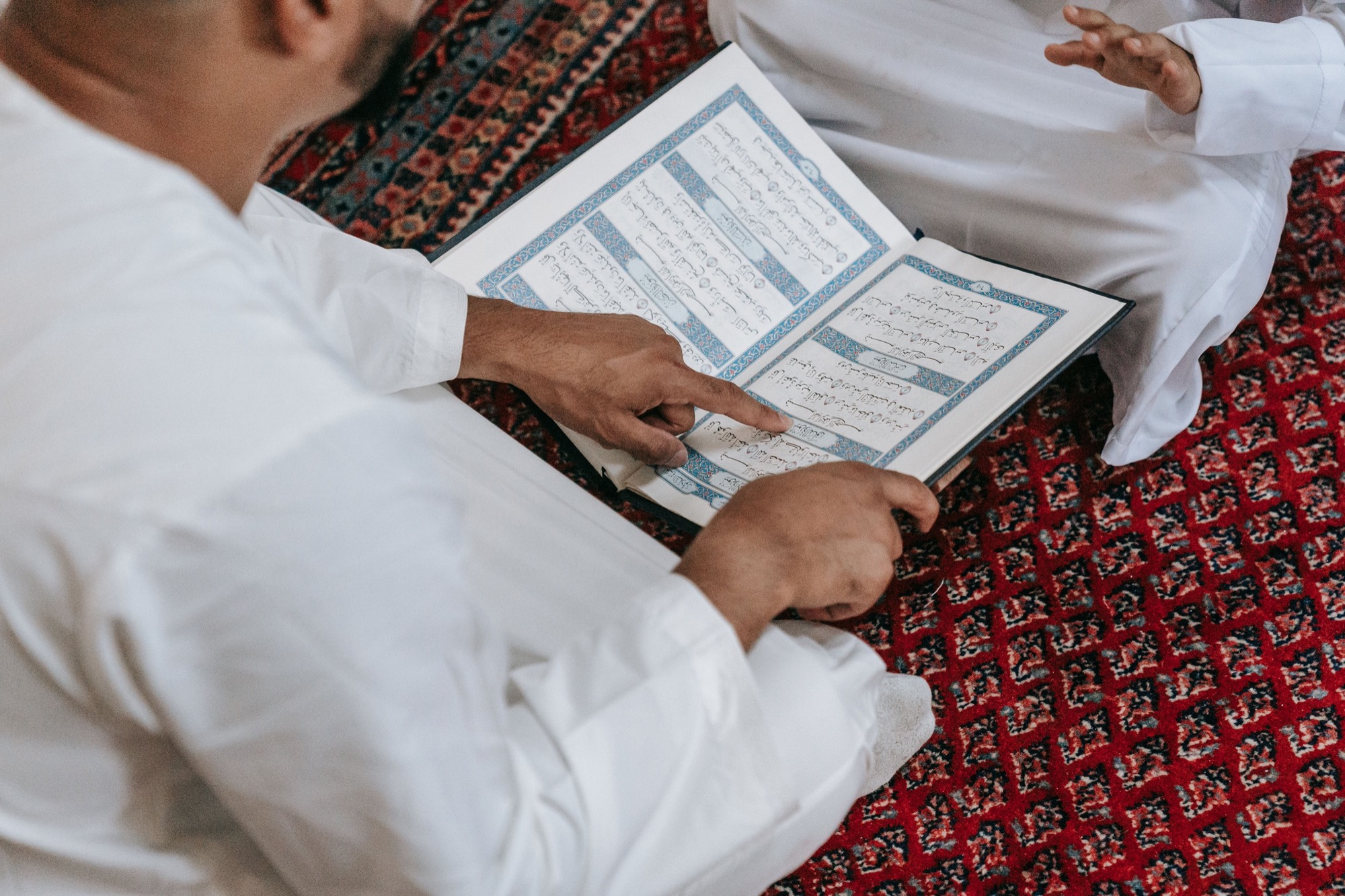

The Best Daily Routine for Hifz Students
A realistic daily hifz routine built around sabaq, sabqi and manzil — with sample schedules for students, working adults and part-time memorizers, and how to keep it going on bad days.
Ask ten huffaz how they memorized the Qur'an and you'll get ten different stories. Ask them what their day looked like, and the answers converge almost completely.
The routine is the method. Not motivation, not talent, not a special technique — a small set of things done in the same order, every day, for years.
Here's what that routine actually is, and how to build one that fits your life rather than someone else's.
The three parts of every hifz day
Every serious memorization routine — traditional madrasah or self-taught adult — divides the day's work into three jobs:
- Sabaq — the new lesson. The lines you're memorizing today. Small in quantity, heavy in repetition.
- Sabqi — recent memorization. Roughly the last week's worth of pages. Recited daily, from memory, without looking.
- Manzil — old memorization. Everything else, cycled through on a rotation so nothing sits untouched for too long.
The mistake nearly every beginner makes is spending the whole session on sabaq. It feels productive — you're adding pages. But six months later the early pages are gone, and you're effectively standing still.
Review is the actual work of hifz. New pages are the easy part.
How to split your time
A reliable starting ratio for the total time you spend:
| Component | Share of session | What it is |
|---|---|---|
| Sabaq (new) | ~30% | Today's new lines |
| Sabqi (recent) | ~30% | Last ~7 days of pages |
| Manzil (old) | ~40% | Rotation through everything else |
Early on, when you have little memorized, manzil takes almost no time and most of your session is new material. That's fine. But as your hifz grows, the balance must shift toward review — and eventually, maintaining what you have will take more time than adding to it. That's not a problem; that's the job.
The best time of day to memorize
For new memorization, early morning after Fajr is the strongest window for most people, and this is what traditional hifz programs have used for centuries. Your mind is unclouded, the house is quiet, and nothing has happened yet to occupy your attention.
Allah refers to this time specifically: "Indeed, the recitation at dawn is ever witnessed." (Qur'an 17:78)
If Fajr genuinely doesn't work for your life, the principle to preserve is: do new memorization when your mind is freshest, and review when it isn't. Review can survive a tired brain. New memorization can't.
Spread review across the day
Here's the change that makes hifz sustainable for busy people: you do not need one long block. Review works better broken into pieces, and the five prayers give you natural anchors.
- After Fajr — new lesson, plus recent pages
- Around Dhuhr — a portion of manzil
- After Asr — another portion
- After Maghrib — recent pages again
- Before sleep — light run through today's new lines
By Isha you may have covered a full juz of review without ever sitting down for an exhausting hour. Small and frequent beats long and rare — for retention and for staying sane.
Sample routines
Full-time student (2–3 hours daily)
- After Fajr (60 min): New lesson. Read the lines correctly several times, then memorize in small chunks, then join them.
- Mid-morning (30 min): Sabqi — last week's pages, from memory, out loud.
- Afternoon (45 min): Manzil — one juz on rotation.
- After Maghrib (20 min): Re-recite today's sabaq so it consolidates overnight.
Working adult (45–60 minutes daily)
- Before work (25 min): New lesson — keep it to 3–5 lines, not a page.
- Commute or lunch break (15 min): Sabqi, recited quietly from memory.
- After Isha (15 min): Manzil rotation, plus a final pass on today's lines.
Part-time or maintenance only (20–30 minutes daily)
If you're not adding new material and simply want to keep what you have:
- 15–20 min daily of manzil rotation, out loud from memory
- Cycle so that every page is touched at least every 7–30 days depending on strength
This is enough to hold a substantial hifz indefinitely.
Rules that make the routine work
Recite out loud, from memory, always. Silent reading will lie to you. You recognize the words on the page, feel confident, and then blank when you have to produce them. Close the mushaf.
Repeat in small chunks, then connect. Take two or three lines at a time. Repeat until fluent, then join them to what came before. Trying to memorize a whole page at once is slower, not faster.
Fix pronunciation before memorizing. Read the new lines correctly — with a teacher, a recording, or a tool — before you start repeating them. Anything you memorize wrong has to be unlearned later, which costs far more time.
End the day on something solid. Finishing on a page you know well leaves you feeling capable rather than defeated.
Sleep matters. Memory consolidates during sleep. A student who sleeps well and memorizes 5 lines will retain more than one who's exhausted and memorizes 10.
Adjusting the routine to reality
A routine that only works on good days isn't a routine. Build in flexibility deliberately:
- Define a minimum day. On your worst day, what's the smallest version you'll still do? Ten minutes of manzil, no new lesson. Have this decided in advance so you don't negotiate with yourself.
- Skip new material before you skip review. If time is short, drop sabaq and protect manzil. New pages can wait a day; old pages decay.
- Missing one day is nothing. Missing three starts a pattern. Get back the next morning without a guilt spiral.
- Reassess monthly, not daily. If you consistently can't finish sessions, the plan is too big. Shrink it — a smaller routine you complete beats a larger one you abandon.
Knowing what to revise each day is where most routines quietly fall apart — you either over-review recent pages or forget that a juz from four months ago is going stale. Hufaaz handles that scheduling for you, and while you recite it listens, catching the exact word you slip on and playing it back correctly in your chosen Qari's voice.
Common mistakes in daily routines
- All sabaq, no manzil. The classic error. Feels productive, produces nothing lasting.
- Setting an unsustainable pace. A page a day sounds impressive until week three. Half a page you maintain for two years beats a page you keep for a month.
- Reviewing by reading, not reciting. Reading with your eyes builds recognition, not recall. They are different skills.
- No fixed time. "Whenever I get a chance" reliably becomes never. Anchor the session to a specific event in your day.
- Ignoring similar verses. The mutashabihat cause more errors than anything else and need targeted attention, not just more repetition.
- Treating a missed day as failure. Guilt causes more abandoned hifz than tiredness does.
Frequently asked questions
How much should I memorize per day? Start with 3–5 lines and hold that until it feels comfortable for several weeks. Most people should stay well below a page. Your sustainable pace is whatever you can still do on a mediocre day.
Is Fajr really necessary? Not necessary, but genuinely advantageous — your mind is clearest and interruptions are fewest. If it's impossible, use whatever time your mind is freshest for new memorization and give the tired hours to review.
How long until I finish the Qur'an? At half a page daily with consistent review, roughly 3–4 years. At a page daily, 2–3 years — if you sustain it, which most people don't. Consistency beats speed by an enormous margin.
Can I memorize while doing other things? Review, yes — walking, commuting, and chores are excellent for manzil. New memorization needs your full attention and shouldn't be multitasked.
What if I miss several days? Restart with review only. Spend a few days rebuilding recent pages before adding anything new. Don't try to "catch up" by doubling — that reliably leads to quitting.
How do I know when a page is solid? When you can recite it from memory, out loud, without hesitation, on three separate days without looking. Until then it belongs in the recent-pages rotation, not the long one.
Should I memorize from the beginning or from Juz Amma? Either works. Juz Amma is easier and immediately useful in prayer, which suits beginners and children. Starting from al-Baqarah suits those committed to the full Qur'an. Pick one and stay with it — switching costs momentum.
A good hifz routine isn't complicated. Fresh mind for new lines, review spread across the day, everything recited out loud from memory, and a minimum version you can do even when life is hard.
Build that, keep it for a year, and you'll be further along than most people who started with far more ambitious plans.
If you'd like your daily revision planned for you — and a companion that listens and corrects you as you recite — Hufaaz is free on Google Play.