
The Best Age to Start Hifz for Kids (A Parent's Guide)
When should your child start memorizing the Qur'an? A calm, practical guide to the best age to begin hifz, how to prepare younger children, and how to make it a joy — not a burden.
Every parent who wants their child to become a hafiz asks the same question: when should we start? Begin too early and you risk frustration; wait too long and you feel you've missed the window. So what's the sweet spot?
Here's a calm, practical answer — plus how to prepare a younger child and, most importantly, how to keep it a source of joy rather than pressure.
The short answer: roughly 6 to 10 years old
Many Qur'an teachers point to the "golden age" of around 5 to 10 for hifz, with formal, independent memorization usually starting best around 6 or 7. At this age children have:
- Strong, quick rote memory
- Enough focus to sit for short structured sessions
- Usually, the reading basics to work from the mushaf
This is a guideline, not a deadline. Children develop at different rates — readiness matters more than the exact birthday.
Before 6: prepare, don't push
If your child is 3, 4, or 5, you don't have to wait idly — but formal hifz can wait. Focus on gentle preparation:
- Listening. Play recitation at home so the sounds and rhythm become familiar.
- Short surahs and duas. Little ones can absorb the last few short surahs and everyday duas just by hearing and repeating them.
- Love first. Let their earliest experience of the Qur'an be warm and positive, never a chore.
This quiet groundwork makes formal memorization much smoother when it begins.
What about older kids — or teens?
If your child is 10, 12, or older, you have not missed the window. Older children and teens memorize successfully all the time, and they bring something younger kids lack: understanding. They can grasp meaning, which helps verses stick. The same is true for adults — as we cover in how to start hifz as an adult. Age changes the approach, not the possibility.
Readiness matters more than age
Rather than fixating on a number, look for signs your child is ready:
- Can they sit and focus for 10–15 minutes?
- Can they read (or are they close to reading) Arabic letters?
- Do they show interest, or at least willingness — not dread?
A ready eight-year-old will do better than a pushed five-year-old. Meet the child where they are.
Keep sessions short, positive, and consistent
For children, short and daily beats long and occasional. A few focused verses each day, celebrated warmly, builds a lifelong relationship with the Qur'an. Long, tearful sessions build the opposite.
- Keep early sessions to 15–20 minutes.
- Praise effort, not just results.
- End on a success, so they look forward to tomorrow.
Get pronunciation right early
Children memorize whatever they hear — including mistakes. Getting tajweed and pronunciation correct from the start saves a great deal of re-learning later. Reciting to a teacher, or to a tool that gently flags errors, keeps their foundation clean.
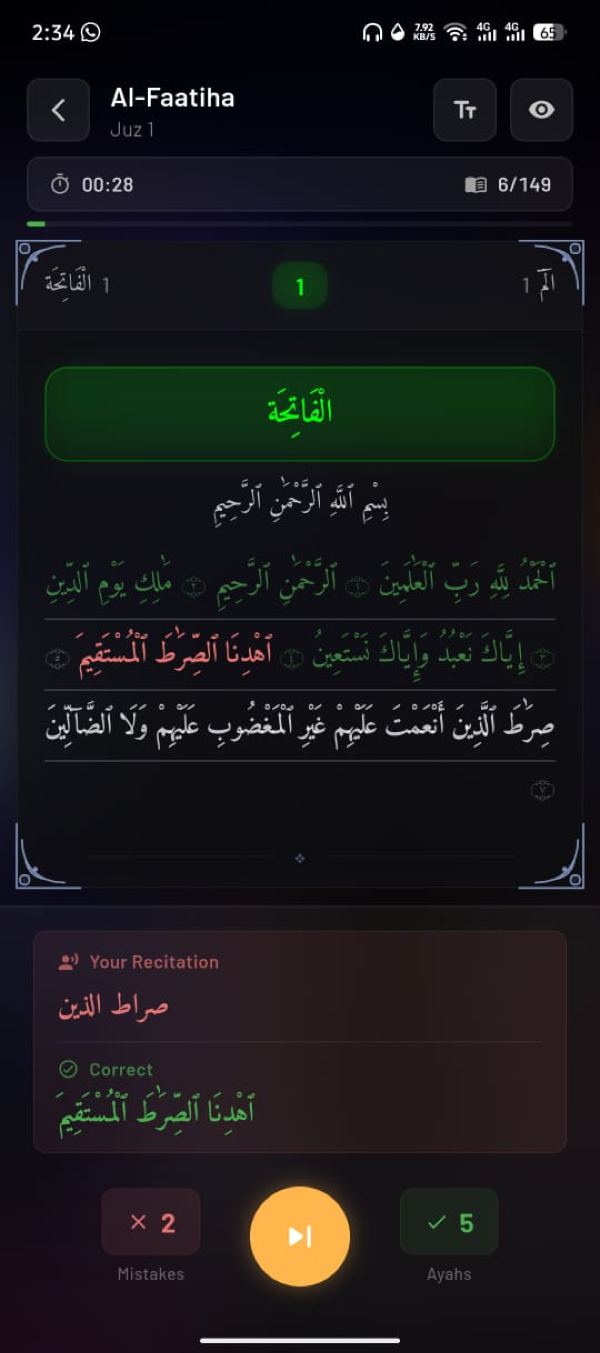
Many parents can't sit and correct every session — and shouldn't have to become the "hifz police." Hufaaz can help: your child recites out loud, and the app catches the exact words they get wrong and plays them back correctly in a beautiful Qari's voice they enjoy imitating. It keeps corrections patient and consistent, and it tracks review so pages don't slip away.
Protect what they memorize
The same rule applies to children as adults: new pages fade without review. Build a light daily review of older surahs into the routine from the beginning, so your child's growing hifz stays solid instead of leaking.
The best time to start formal hifz is usually around 6 to 10 — but readiness, consistency, and keeping it joyful matter far more than hitting an exact age. Prepare younger ones through listening and short surahs, meet older children where they are, keep sessions short and warm, and protect every page with review.
Want a gentle, encouraging companion for your child's hifz? Hufaaz is free on Google Play — it listens, corrects kindly in a Qari's voice, and keeps their revision on track.