

A Hifz Plan for Ramadan (That Survives the Month)
Ramadan changes your sleep, your energy and your whole schedule. How to adjust your memorization and review so the month strengthens your hifz instead of breaking it.
Ramadan arrives and everyone raises their target. More pages, more juz, a complete khatm. Then the first week of fasting lands on a disturbed sleep schedule, and by the tenth night the plan is gone — along with some of the review that was holding steady before the month began.
The month genuinely is a gift for the Qur'an. But the reason ambitious Ramadan plans collapse isn't weak intention. It's that Ramadan changes the conditions your routine was built for, and a plan that ignores that is planning for a month you won't actually have.
So here is a plan built around what the month really does to your schedule.
What Ramadan actually changes
Four things, and each one points at a different adjustment.
Your sleep fragments. Suhoor splits the night. Most people end up with less total sleep and it arrives in pieces. New memorization is the first thing to suffer, because it needs a rested mind more than any other part of hifz.
Your energy is lowest in the afternoon. The hours before Maghrib are usually the hardest for concentration. Anything demanding scheduled there tends not to happen.
Your evenings fill up. Iftar, Taraweeh, family, community. The slot that worked all year may not exist for thirty days.
But you gain two excellent windows that you don't have the rest of the year: the time after suhoor, and the hours around Taraweeh. Both are quiet and both come with a natural anchor.
The key decision: review month, not memorizing month
Here is the shift that matters most.
Most people should reduce new memorization during Ramadan and increase review. Not stop — reduce, often to half your usual portion. Then put the freed time into what you already hold.
There are three reasons this works better than the opposite:
It matches your energy. New memorization needs a clear head, which Ramadan supplies less of. Review is far more forgiving of tiredness — it survives a fasting afternoon in a way that learning new pages does not.
It uses Taraweeh. If you're reciting in prayer, or even following an imam attentively, you're already working through large amounts of Qur'an. That's review happening whether you schedule it or not.
It protects you from the worst outcome. The common Ramadan failure isn't falling short of a target. It's coming out of the month with more pages "memorized" and a weaker overall hifz, because thirty days of skipped review quietly softened everything underneath.
Coming out of Ramadan with your existing hifz noticeably firmer is a better month's work than adding two juz on an eroding foundation.
Where to put each part of the day
After suhoor, before Fajr — new memorization. This is the best slot in the month for it. You're awake, you've eaten, the house is quiet, and nothing has claimed your attention yet. If you're memorizing anything new in Ramadan, put it here.
After Fajr — review of recent pages. The pages from the last few weeks, the ones most at risk of slipping. This slot is already a habit for many people, and it survives the month well.
Mid-morning or after Dhuhr — older review. Your longer review cycle, working through juz you've held for a while. Undemanding enough for a fasting day.
Afternoon — nothing, or light listening. Be realistic here. This is the hardest stretch of the day. If you want to fill it, listen to a Qari reciting portions you know rather than trying to produce anything.
After Taraweeh — one pass over the day's new portion. Short, five to ten minutes, just to settle it before sleep.
Notice that the heaviest work sits at the two ends of the day, and the afternoon is deliberately left empty. A plan that demands concentration at 4pm in Ramadan is a plan that gets abandoned.
If you're preparing to recite in Taraweeh
This is a different situation with a different answer, and it needs to start well before the month does. Reciting a juz publicly is a real commitment, and the preparation is specific enough that it has its own guide — see how to prepare a juz for Taraweeh.
The short version: begin at least six to eight weeks before Ramadan, split the juz into daily portions, and rehearse the transitions between pages rather than the pages alone. Once the month starts, your Ramadan plan becomes almost entirely maintenance of that juz.
The last ten nights
Plan for them in advance. They will disrupt whatever routine you've built.
If you're doing i'tikaf or praying long into the night, your schedule inverts. Accept that and set a floor rather than a target for those ten days: a minimum amount of review you'll do no matter what, even if it's fifteen minutes.
This is where the year-round principle matters most. Protect the review, drop the new pages. Ten days without new memorization costs you very little. Ten days of no review, at the end of a month where review was already reduced, is how people find their hifz has quietly weakened by Eid.
What to do in the week before Ramadan
A little preparation removes most of the problems.
Decide your reduced portion now. Half your usual is a good default. Deciding in advance stops you improvising on day three when you're tired.
Get your review cycle current. Enter the month with nothing overdue. Starting Ramadan already behind on review means the debt compounds through the whole month.
Test your suhoor slot. Try memorizing at that hour a few times before the month starts, so you know whether it works for you rather than discovering on the first fast.
Write the plan down. One line per slot. A plan you can re-read at midnight on the fifteenth night is worth more than one you were confident about on the first.
After the month
One more thing. This is where a good Ramadan gets wasted.
Eid ends the structure overnight. The suhoor slot disappears, Taraweeh stops, and for a lot of people the whole routine stops with it. Then it's June and the hifz that was strong in Ramadan has slipped badly.
Decide in advance which everyday slot you'll return to, and use it on the second day of Eid. Not next week. The gap is what breaks the habit, and it's much easier to keep a chain intact than to restart one. Our revision schedule guide covers what that normal cycle should look like.
Frequently asked questions
Should I memorize new Qur'an during Ramadan? Usually less than normal — often half your usual portion — with the freed time going into review. New memorization needs a rested mind, which Ramadan supplies less of, while review survives fasting and disrupted sleep much better. Reducing rather than stopping keeps momentum without overreaching.
What's the best time to memorize during Ramadan? After suhoor, before Fajr. You're awake, you've eaten, the house is quiet, and nothing has claimed your attention. It's the strongest slot the month offers for demanding work, and it comes with a natural anchor so it's easy to keep.
How do I revise the Qur'an while fasting? Put review in the early parts of the day and around Taraweeh, and leave the late afternoon largely empty — that's the hardest stretch for concentration. Review tolerates tiredness far better than new memorization, so it's the right work for a fasting day.
Why do Ramadan hifz plans usually fail? Because they're built for a normal month. Ramadan fragments sleep, drains the afternoon, and fills the evening, so a plan that ignores those changes is planning for a schedule you won't have. Ambitious targets set on the first night tend not to survive the second week.
What should I do during the last ten nights? Set a floor rather than a target — a minimum amount of review you'll do regardless, even fifteen minutes. Expect your routine to invert if you're praying long into the night or doing i'tikaf, and protect review over new memorization throughout.
How do I keep my hifz after Ramadan ends? Decide before Eid which everyday slot you'll return to, and use it on the second day of Eid rather than next week. The Ramadan structure disappears overnight, and the gap that follows is what breaks the habit for most people.
Is it better to memorize more or revise more in Ramadan? Revise more, for most people. The common failure is finishing the month with extra pages memorized and a weaker hifz overall, because thirty days of reduced review softened everything underneath. Coming out with your existing memorization firmer is the better outcome.
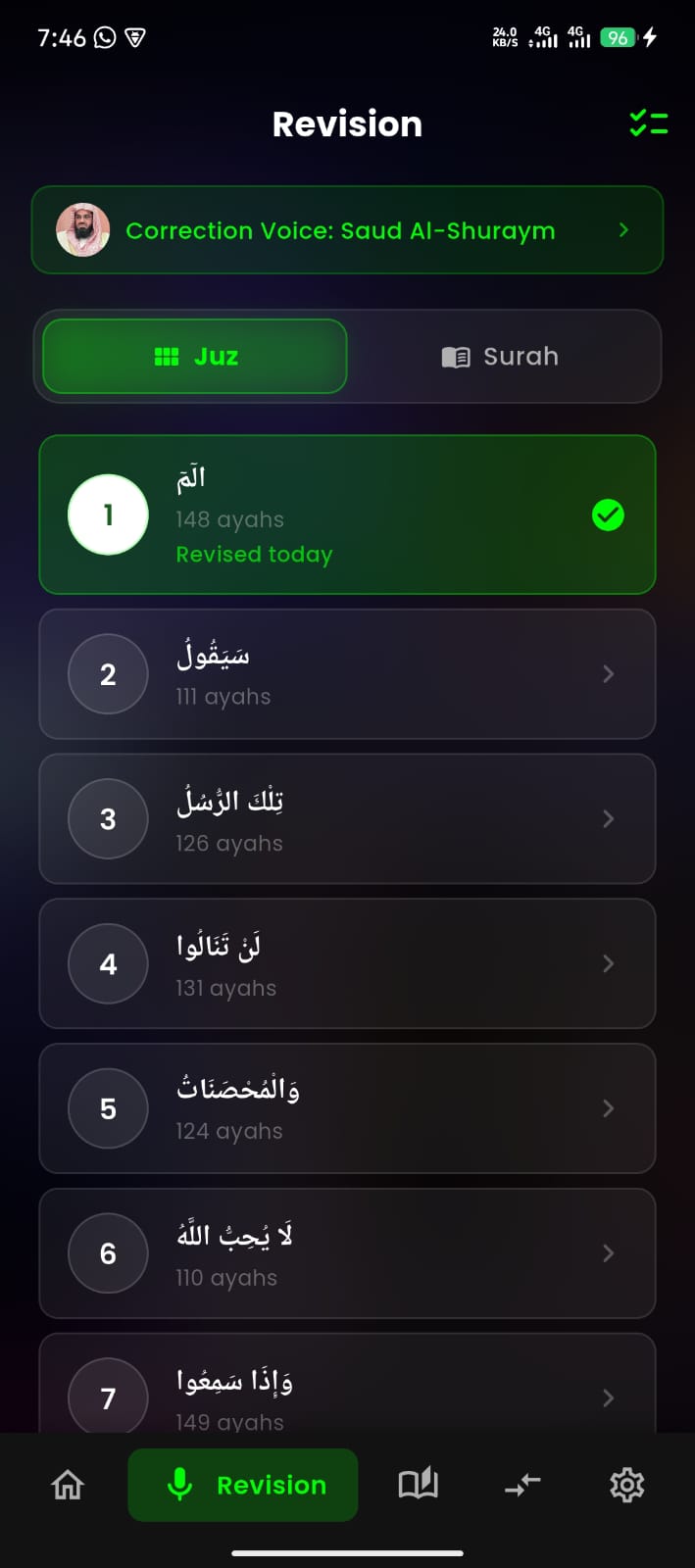
Ramadan's real risk is review debt you can't see accumulating — pages going soft while your attention is on the new portion and the nights. Hufaaz tracks which juz are due and which are slipping, surfaces the weak ones first, and corrects the exact word you stumble on in your chosen Qari's voice.
Conclusion
Ramadan will not give you a normal month, so don't hand it a normal plan.
Cut the new memorization, raise the review. Put demanding work after suhoor and leave the afternoon alone. Set a floor for the last ten nights instead of a target. And decide now what you'll return to on the second day of Eid.
Do that and the month does what it should — it leaves your hifz firmer than it found it. If you'd like something to keep track of what's due while the month reshapes everything else, Hufaaz is free on Google Play. May Allah accept your fasting, your prayer, and your recitation.