

How to Choose a Qur'an Teacher for Hifz
What actually matters in a hifz teacher, what doesn't, the questions to ask before you commit — and the warning signs worth leaving over.
Most advice about finding a Qur'an teacher stops at "find a qualified one." Which is true and not much help, because nearly everyone offering lessons will describe themselves that way.
The more useful question is what a hifz teacher is actually for — and once that's clear, the choice gets a lot simpler.
What the teacher is actually for
You can learn the method from a book or an article. You cannot hear your own mistakes.
This is the whole thing. When you mispronounce a letter, shorten a madd, or drift a vowel, it sounds correct from the inside. You have no way to catch it. Recite that way for a month and the error is memorized — fluently, confidently, and much harder to remove than it was to make.
A teacher is the external ear. Everything else they provide — structure, accountability, encouragement — is genuinely useful, but you could improvise it. The correction you cannot improvise.
Keep that at the front of your mind while choosing, because it tells you which qualities matter.
What genuinely matters
They listen to you recite, every session. This sounds obvious. It isn't. Some classes are mostly lecture, or the teacher follows along while doing something else. If you're not reciting aloud and being stopped when you slip, you're not getting the thing you came for.
They correct precisely. "Good, carry on" is not correction. You want the specific word, what was wrong with it, and the correct form demonstrated. A teacher who lets small errors pass to keep the session pleasant is expensive in the long run.
Their own recitation is sound. Listen before committing. Their tajweed is the model you'll absorb, whether or not either of you intends it.
They're consistent. A good teacher you see every week beats an excellent one who cancels half the time. Hifz is built by accumulation, and an unreliable schedule breaks the chain.
They adjust to you. A teacher who gives the same portion to a working adult and a full-time student isn't paying attention. Your pace should be set by what you can hold, not by a fixed curriculum.
What matters less than people think
Ijazah and long chains of transmission. Genuinely valuable, and a real honour. But for basic hifz it's not the deciding factor — a careful teacher with solid tajweed and full attention will serve you better than a highly credentialed one who is distracted or unavailable.
Being a native Arabic speaker. Helpful, not required. Plenty of excellent teachers across the subcontinent, Turkey and Southeast Asia aren't Arabs. What matters is accurate recitation and a good ear.
Male or female, older or younger. Choose within whatever is appropriate for your circumstances, then judge on ability.
Price. Cheap and expensive lessons vary enormously in quality in both directions. Judge the teaching.
Online or in person?
Both work, and the honest answer is that it depends more on the specific teacher than the format.
In person is generally better for beginners, especially children. Mouth position is easier to demonstrate and correct, attention is harder to drift, and the accountability is more real.
Online wins on access and consistency. If the alternative is a two-hour round trip you'll skip half the time, or no qualified teacher nearby at all, online is clearly the better choice. For correction of recitation specifically, a good video call is close to a good in-person session.
Our comparison of online classes and traditional madrasah goes through the trade-offs in more detail.
Questions to ask before you commit
Ask these in a trial session. The answers are revealing.
"How much of each session will I spend reciting?" You want a large majority. If it's mostly listening, look elsewhere.
"How will you decide my daily portion?" Good answer: they'll start you somewhere and adjust based on how much you retain. Bad answer: a fixed amount, decided before they've heard you.
"What happens when I fall behind?" You will, at some point. You want a teacher who adjusts the plan, not one who applies pressure or shame.
"How do you handle review?" If they only listen to new pages and never ask for older ones, your review is unsupervised — and review is where hifz is actually kept. A good teacher asks for old juz regularly.
"Can I do a trial lesson?" Almost any serious teacher will agree. A refusal tells you something.
Warning signs
Leave over any of these:
Harshness towards children. Fear does not produce huffaz. It produces adults who avoid the mushaf. If a teacher shouts, humiliates, or hits, that is the end of the matter — find someone else.
Ignoring errors to keep things comfortable. A teacher who never corrects you isn't being kind. They're letting mistakes set.
Pushing a pace you can't hold. If you're consistently unable to recite the previous day's portion, and the response is to keep the amount the same, they're prioritising the curriculum over your hifz.
Never asking for older material. New pages only, with no revision, means a growing pile of pages that nobody is checking. The most common hifz mistakes almost all come from unsupervised review.
If you genuinely can't find a teacher
Not everyone has one available. Some arrangement is far better than none, so in rough order:
A weekly video call with a qualified teacher, even if that's all you can manage.
A study partner further along than you, following in the mushaf while you recite.
A local hafiz at your masjid who'll hear you once a week after prayer. Many will, if asked.
Recording yourself and comparing against a Qari's recitation. Weakest of the four, but far better than reciting into a void — hearing yourself played back catches things you miss while speaking.
Start with what you can get and keep looking. The gap left by no correction at all is the one that costs most.
Frequently asked questions
How do I choose a Qur'an teacher for hifz? Judge them on whether they hear you recite every session and correct precisely, whether their own recitation is sound, and whether they adjust your portion to what you can actually retain. Those matter more than credentials, since the teacher's core job is catching the errors you can't hear yourself.
What qualifications should a hifz teacher have? Solid tajweed and a good ear are the essentials. Ijazah and chains of transmission are valuable and honourable, but for basic hifz a careful, attentive teacher without one will serve you better than a highly credentialed teacher who is distracted or unreliable.
Is an online Qur'an teacher as good as in person? For correcting recitation, a good video call comes close to a good in-person session. In person is generally better for beginners and children, where mouth position and attention are easier to manage. Online wins on access and consistency, which usually matters more.
What questions should I ask a Qur'an teacher before starting? Ask how much of each session you'll spend reciting, how they decide your daily portion, what happens if you fall behind, and how they handle review of older pages. Ask for a trial lesson — a serious teacher will agree.
Do I need a teacher to memorize the Qur'an? You can learn the method alone, but you cannot hear your own pronunciation errors, and those get memorized fluently and become hard to remove. If a regular teacher isn't possible, a weekly call, a study partner, or a local hafiz who hears you once a week all beat no correction at all.
What are the warning signs of a bad hifz teacher? Harshness towards children, letting errors pass to keep sessions comfortable, insisting on a pace you clearly can't hold, and never asking to hear older memorized material. Any of these is a reason to look elsewhere.
How often should I recite to my teacher? Once a week is a workable minimum for an adult memorizing part-time; more is better if you can manage it. What matters as much as frequency is that they hear both your new portion and older pages, so your review isn't going unchecked.
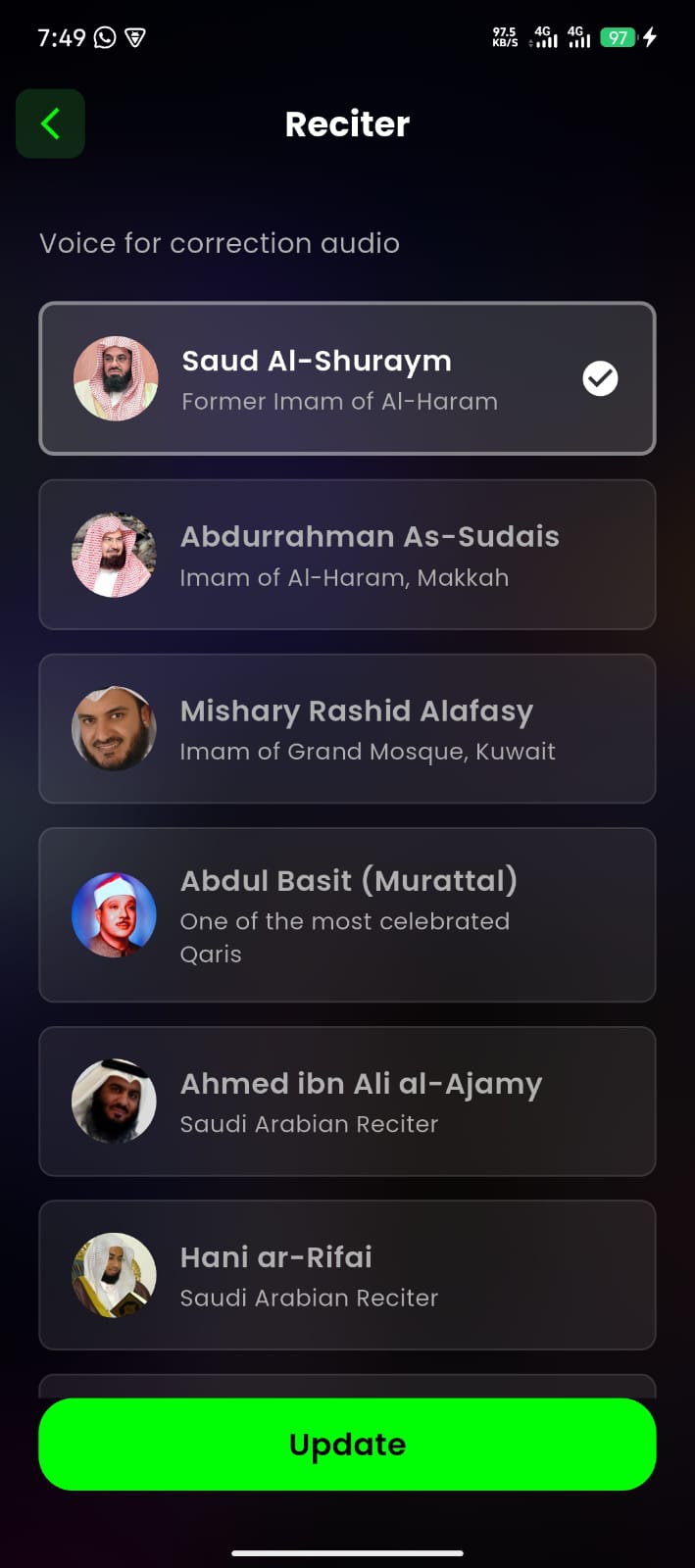
Between sessions, most errors happen with nobody listening — and those are exactly the ones that set. Hufaaz listens while you recite from memory, catches the precise word you slip on, and plays the correct version in your chosen Qari's voice, so the gap between lessons isn't unsupervised.
Conclusion
A hifz teacher's real job is narrow and essential: hearing what you can't. Choose on that.
Look for someone who listens to you recite every session, corrects the specific word rather than the general impression, asks for old juz as well as new, and adjusts your portion to what you're actually holding. Ask for a trial lesson and ask the four questions. Leave over harshness, over silence where correction should be, and over a pace that keeps failing.
And if the ideal teacher isn't available, take the imperfect arrangement now rather than waiting. A weekly call with someone competent beats a year of reciting to nobody.
If you'd like something listening between sessions, Hufaaz is free on Google Play. May Allah guide you to a teacher who brings you closer to His book.