
How to Memorize One Page of Qur'an (Step by Step)
Most hifz advice covers schedules and review. This covers the sitting itself — how to take one blank page and have it solid by the time you stand up.
There is plenty of advice about how often to review, how much to attempt, and what time of day to sit. Far less about the thing in the middle: you are looking at a page you don't know, and in forty minutes you need to know it.
That sitting has a shape. Once you learn it, new pages stop being a wrestling match and become a routine — the same steps, in the same order, every day. Here is the version that works for most people.
Before you start: two things that decide the outcome
Read the page first, as reading. Before memorizing anything, read the whole page aloud from the mushaf two or three times. You're not trying to retain it yet. You're removing the surprises — the unfamiliar word, the place where the line breaks oddly, the ayah that runs longer than you expected. Meeting those for the first time while memorizing is what makes a page feel impossible.
Fix any word you're unsure of now. If there's a word you're not certain how to pronounce, settle it before you start repeating it. Once a wrong version has been said fifty times, it is genuinely difficult to remove.
Step 1: Work in lines, not pages
Don't try to hold the page in your head. Take the first line only.
Read it aloud from the mushaf, slowly and correctly, about five times. Then look away. Say it from memory. If you stumble, look back and repeat. Keep going until you can produce the line three times in a row without checking.
Three clean repetitions. Not one lucky pass — three, consecutively, with the mushaf closed or covered.
Then move to line two, and do exactly the same.
Step 2: Join every line to the one before it
Most people skip this step. It is the one that decides whether the page holds.
After you've learned line two on its own, recite lines one and two together, from memory. Then learn line three, and recite one, two and three together. Then four, and recite all four.
It feels repetitive. It is. But the joins are where hifz breaks. You will meet reciters who know every line of a page individually and cannot get through the page, because they only ever practised the lines — never the transitions between them. Each join needs its own repetitions, and the only way to give it those is to keep rebuilding from the top.
By the time you reach the last line, line one will have been recited a dozen times. That is not waste. That is the page becoming one continuous thing instead of fifteen separate ones.
Step 3: Recite the whole page, from memory, several times
Once every line is in and joined, recite the whole page from memory. Start to finish. No stopping, no peeking.
The first attempt will be shaky. Do it again. And again. Aim for three consecutive complete recitations with no errors before you consider the page done for the day.
If you slip in the same place twice, stop and work that spot specifically: open the mushaf, look at the two lines around it, and repeat just that join ten times. Then restart the full page. A page with one weak seam is a page that will fail you in a week.
Step 4: Come back to it before you sleep
Before bed, recite the page once more from memory. Five minutes. It does a disproportionate amount of work — sleep is when memory consolidates, and giving the new page one clean pass shortly before is the cheapest reinforcement available.
Then recite it again the next morning, before you start the new page. That morning pass tells you the truth about yesterday's sitting. If it's gone, you moved too fast. If it's solid, your portion size is right.
How many repetitions, honestly
People want a number, so here is a realistic range: a line typically needs ten to twenty repetitions before it's stable, counting the times it comes round again during the joins.
But the number is not the point. Chasing it is a trap — twenty distracted repetitions do less than eight attentive ones. What actually matters is that every repetition is from memory, aloud, and correct. Reciting while reading the page trains reading. Reciting silently trains neither. Reciting a mistake trains the mistake.
So don't count. Use the standard instead: three consecutive clean repetitions, at the line level and again at the page level. That adapts itself to a hard page and an easy one without you deciding anything.
Recite aloud — this is not optional
Memorizing under your breath feels faster. It is substantially worse.
Hifz is stored partly as a motor pattern. Your tongue learns the sequence alongside your mind, and in recitation it often leads — which is why a hafiz who blanks can sometimes recover by simply starting to speak. Silent repetition never builds that layer.
Reciting aloud also exposes errors. You hear the wrong vowel, the shortened madd, the swallowed ending. Silent recitation hides all of it, and hidden errors are the ones that get memorized. Every post on this site returns to the same point for the same reason: reciting out loud from memory is what makes hifz stick.
What to do when a page won't go in
Some pages resist. Before you blame the day, check these in order:
Is the portion too large? This is the most common cause by far. Cut it in half. Half a page memorized properly beats a full page half-memorized, every time.
Are you memorizing from a page you can't read cleanly? If you're still decoding while trying to retain, you're doing two hard things at once. Read the page a few more times as plain reading first.
Is it the mutashabihat? If the page contains a phrase that also appears elsewhere in the Qur'an, your memory will keep switching tracks. That's not a memorization failure — it needs a different technique, covered in what the mutashabihat are and how to stop confusing them.
Are you tired? New memorization is the most demanding work in hifz. A page that takes twenty minutes when you're fresh can take ninety when you're not, and hold worse.
Use the same mushaf
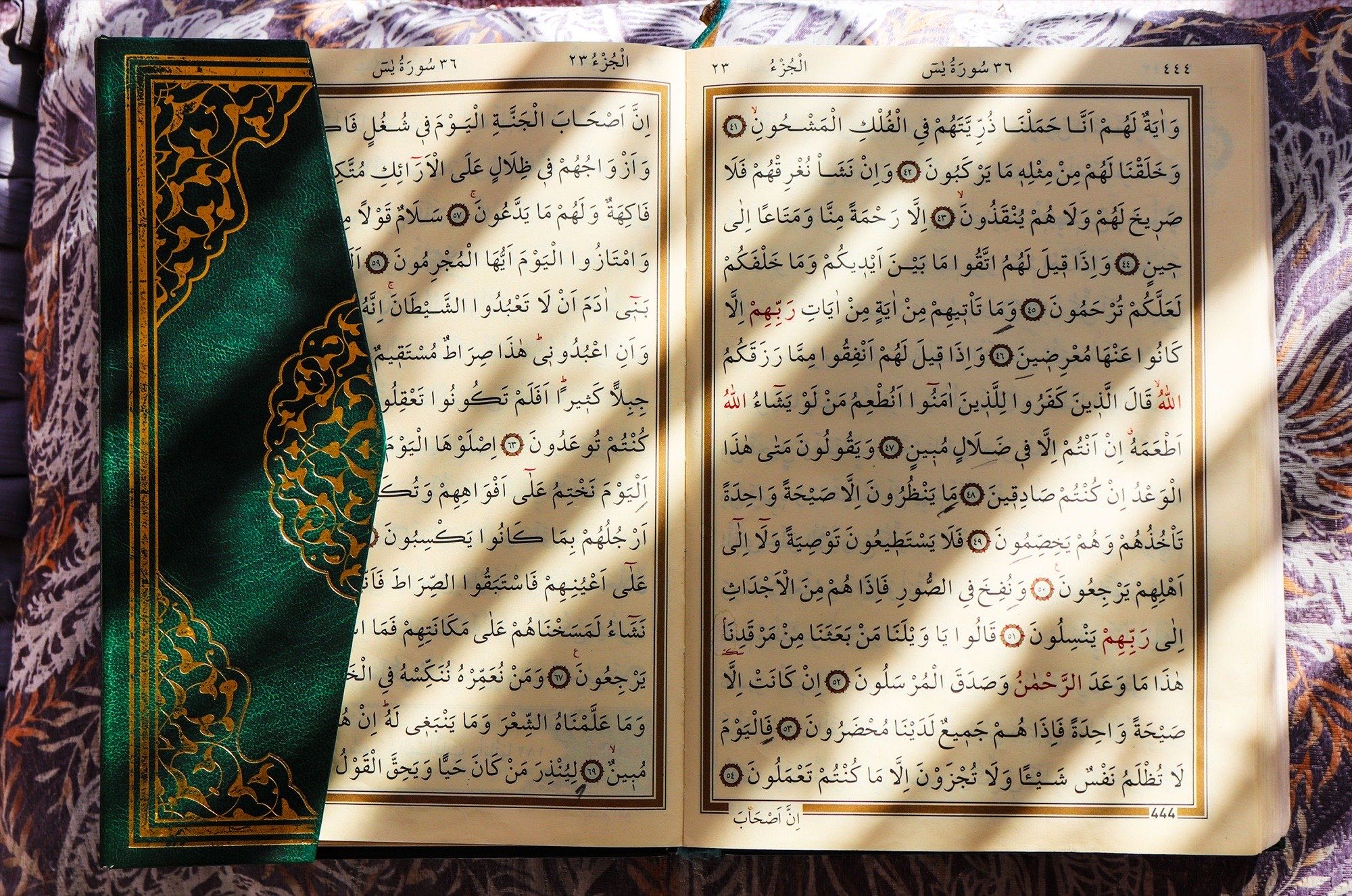
A small thing with a large effect. Memorize from one print, and never change it mid-hifz.
Page layout becomes part of how you store the text. Your memory anchors to where a line sits, where the ayah number falls, where the page breaks. Switch to a different edition and those anchors point at nothing. Most huffaz can tell you roughly where on the page a verse sits — that's the layout doing real work, and it's worth protecting.
Frequently asked questions
How do I memorize one page of Qur'an? Work line by line rather than trying to hold the whole page. Read each line aloud from the mushaf about five times, then recite it from memory until you get three clean repetitions in a row. After each new line, recite from the top of the page so the joins between lines get practised too.
How many times should I repeat an ayah to memorize it? A line usually needs ten to twenty repetitions to become stable, counting the times it recurs while you join lines together. But the count matters less than the quality — every repetition should be aloud, from memory, and correct. Use three clean consecutive repetitions as your standard instead of a fixed number.
Should I memorize Qur'an out loud or silently? Aloud, always. Hifz is stored partly as a motor pattern your tongue learns alongside your mind, and silent repetition never builds that layer. Reciting aloud also exposes pronunciation errors that silent reading hides — and hidden errors are exactly the ones that get memorized.
Why can I recite each line but not the whole page? Because the joins between lines were never practised. Lines learned in isolation stay isolated. Fix it by rebuilding from the top after every new line: learn line three, then recite one through three together, and so on to the end of the page.
How long should it take to memorize one page? Anywhere from twenty minutes to over an hour, depending on the page, your experience, and how alert you are. If it consistently takes far longer than expected, your portion is probably too large — halving it usually produces better retention and a shorter sitting.
What should I do if I keep forgetting the page the next day? Treat it as a signal that the portion was too big or the sitting too rushed, not that your memory is weak. Cut the amount, insist on three clean full-page recitations before finishing, and add one pass before sleep and one the next morning.
Does it matter which mushaf I memorize from? Yes, more than most people expect. Page layout becomes part of how the text is stored — where a line sits, where the page breaks. Changing editions mid-hifz removes those anchors, so pick one print and stay with it.
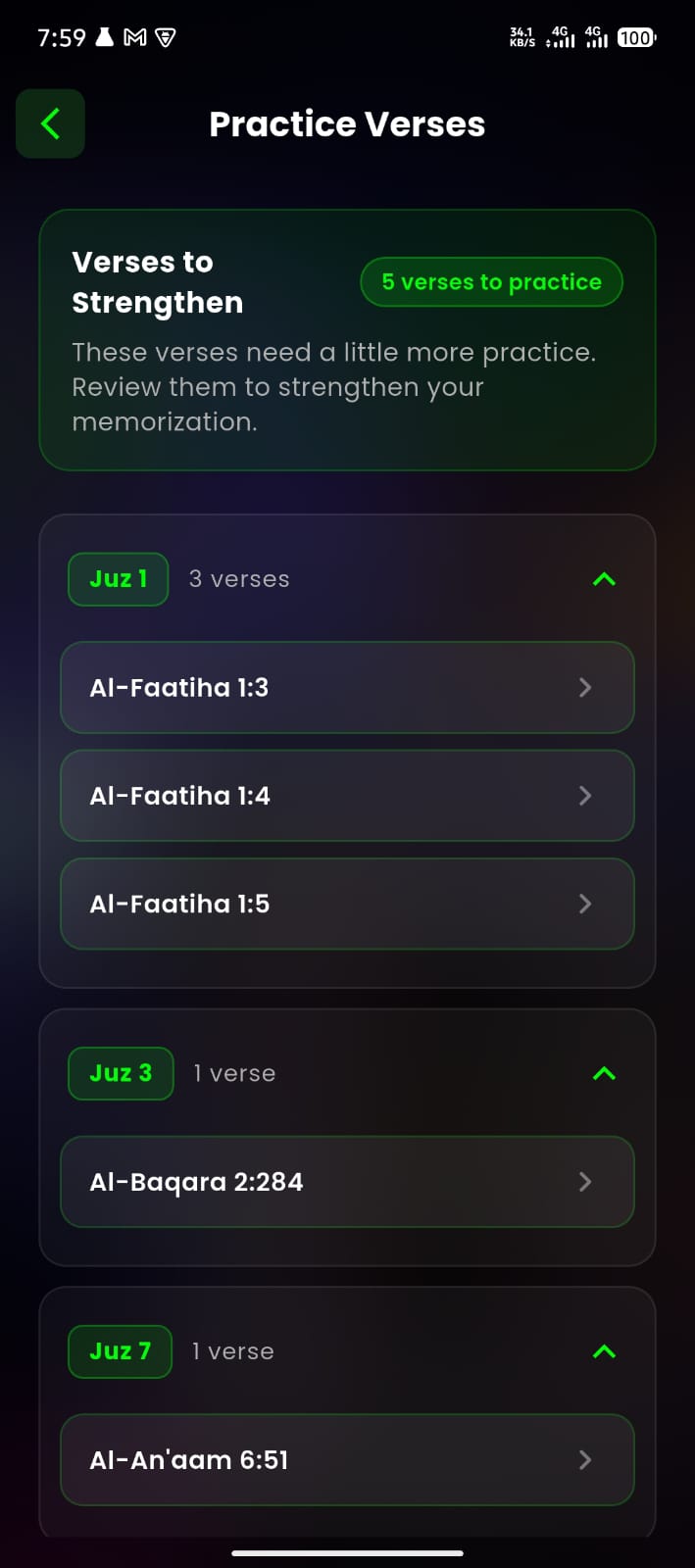
The hardest part of a new page is hearing your own errors, because a mistake recited fluently sounds exactly like correct recitation from the inside. Hufaaz listens while you recite from memory, catches the precise word you slip on, and plays the correct version in your chosen Qari's voice — so a weak seam gets fixed before it sets.
Conclusion
A page is not memorized by staring at it. It goes in line by line, joined as you go, then recited whole until it runs without a stumble.
Read it first as reading. Learn one line at a time to three clean repetitions. Rebuild from the top after every line so the joins get their share. Recite the full page three times cleanly before you stand up. Come back once before sleep and once in the morning.
Do that, and the sitting stops being something you dread and becomes something you simply do. If you'd like something to catch the slips while you do it, Hufaaz is free on Google Play. May Allah make it easy on your tongue and firm in your heart.