
Tajweed for Beginners: Where to Start
A clear beginner's guide to tajweed: what it is, why it matters for reciting and memorizing the Qur'an correctly, and the core rules to learn first.
Two people can recite the same verse, and one of them changes its meaning without realizing it. The difference is tajweed — the set of rules that governs how the Qur'an is pronounced. For anyone learning to recite or memorize, tajweed isn't an advanced luxury. It's the foundation.
If you're just starting out, this guide explains what tajweed is, why it matters so much (especially for hifz), the core rules to learn first, and how to build a solid foundation without feeling overwhelmed.
Why this matters
The Qur'an was revealed with specific pronunciation, and Allah commands that it be recited carefully: "...and recite the Qur'an with measured recitation" (Surah Al-Muzzammil 73:4). The word used, tartil, refers to reciting slowly and correctly — which is precisely what tajweed enables.
The stakes are real for two reasons:
- Wrong pronunciation can change meaning. Arabic letters that sound similar to a beginner are entirely different in meaning. Mispronouncing a letter can turn one word into another — sometimes with a serious change in what the verse says.
- For hifz, mistakes set like concrete. If you memorize a verse with incorrect pronunciation, you memorize the mistake. Un-learning it later is far harder than learning it right the first time. This is why serious teachers insist on correcting recitation before memorization begins.
Getting tajweed right early is one of the highest-leverage things a new student can do.
What tajweed actually is
The word tajweed comes from an Arabic root meaning "to improve" or "to do well." In practice, it is the science of pronouncing each letter of the Qur'an correctly — giving every letter its proper articulation point and its due characteristics, and applying the rules that govern how letters interact.
Reassuringly, applying tajweed correctly is something learners naturally absorb by listening to and imitating skilled reciters. You don't need to master the theory before you can benefit — much of it is caught by ear.
The core areas to learn first
Don't try to swallow the whole science at once. Start with these foundations, in roughly this order.
1. Makharij — the articulation points of the letters
Every Arabic letter is produced from a specific place in the mouth or throat — the throat, the tongue against certain teeth or the palate, the lips. Learning the makharij is the bedrock: it's what lets you distinguish similar-sounding letters (like the different "s" and "h" and "d" sounds) that beginners routinely confuse.
2. Sifaat — the characteristics of the letters
Beyond where a letter comes from, each has qualities — heavy or light, whispered or voiced, with more or less "flow." These characteristics are what give correct recitation its distinct, unmistakable sound.
3. The rules of Noon Sakinah and Tanween
One of the first rule-sets every beginner learns. It governs what happens to a silent noon (ن) or tanween when followed by different letters — producing clear pronunciation (izhar), merging (idgham), conversion (iqlab), or a nasal hiding (ikhfa). It appears constantly, so learning it early pays off immediately.
4. Rules of Meem Sakinah
A companion rule-set governing the silent meem (م). Small and manageable, and you'll use it in almost every verse.
5. Madd — the lengthening of vowels
Madd rules tell you how long to hold certain vowel sounds — some for two counts, others for longer. Getting the lengths right is a big part of what makes recitation sound correct and measured.
You don't need to name every rule to apply it — but knowing these categories gives your ear something to latch onto.
How to build a solid foundation
Learn from a qualified teacher. This is the most important tip and there's no real substitute. Tajweed is an oral tradition passed down through listening and correction. A teacher hears the fine articulation errors you cannot hear in yourself. Whether in person or online, find someone qualified.
Listen and imitate constantly. Choose a skilled Qari and listen closely, then imitate. Much of tajweed transfers by ear before you understand the theory. Repeated, attentive listening trains your tongue.
Master the Arabic letters and Noorani Qaida first. Before the Qur'an itself, most beginners work through a foundational primer (like the Noorani Qaida) that drills the letters, their sounds, and basic combinations. Don't skip this stage — it's where correct pronunciation is built.
Go slow — tartil, not speed. Reciting slowly and deliberately is exactly what the Qur'an instructs, and it's how you apply the rules accurately. Speed comes later, and it comes on its own.
Recite aloud and get corrected regularly. Reading tajweed rules in a book is not enough; the science lives in the mouth. Recite out loud to someone — or something — that will catch and correct your errors before they become habits.
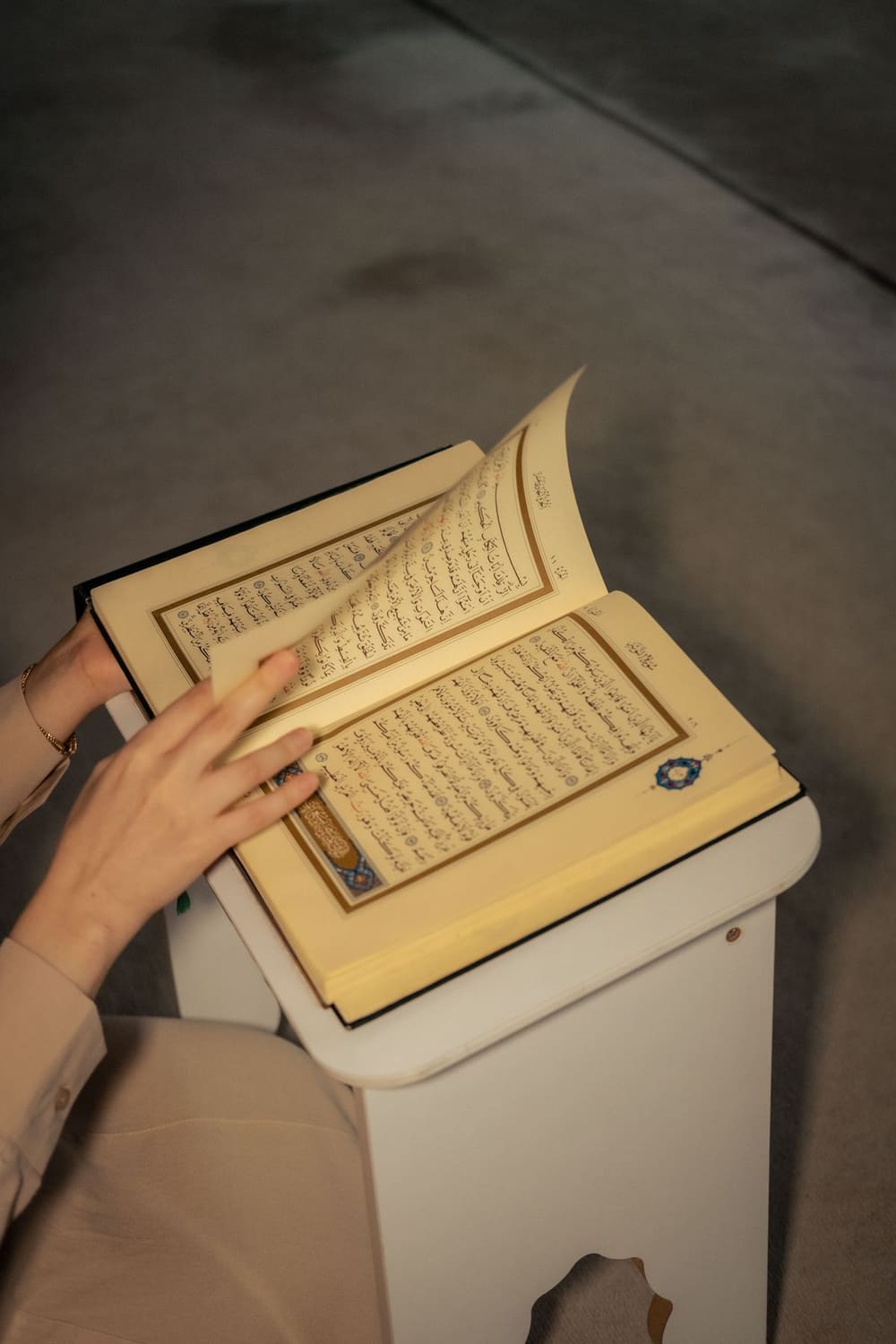
Use a colour-coded (tajweed) mushaf. Many printings colour the letters according to the rule that applies, giving you a constant visual reminder while you recite. A helpful support for beginners.
Tajweed and hifz: the crucial link
If your goal is memorization, this section is the reason the rest matters.
Fix recitation before you memorize. Memorizing with incorrect pronunciation means memorizing the error — and you'll then have to un-learn it, which is far harder than learning it correctly the first time. Spend the time getting your recitation accurate before you start locking pages into memory.
Correction has to be continuous. During hifz, small pronunciation slips creep in unnoticed because the wrong version is still fluent-sounding. Something must be catching them regularly — a teacher, a study partner, or a tool.
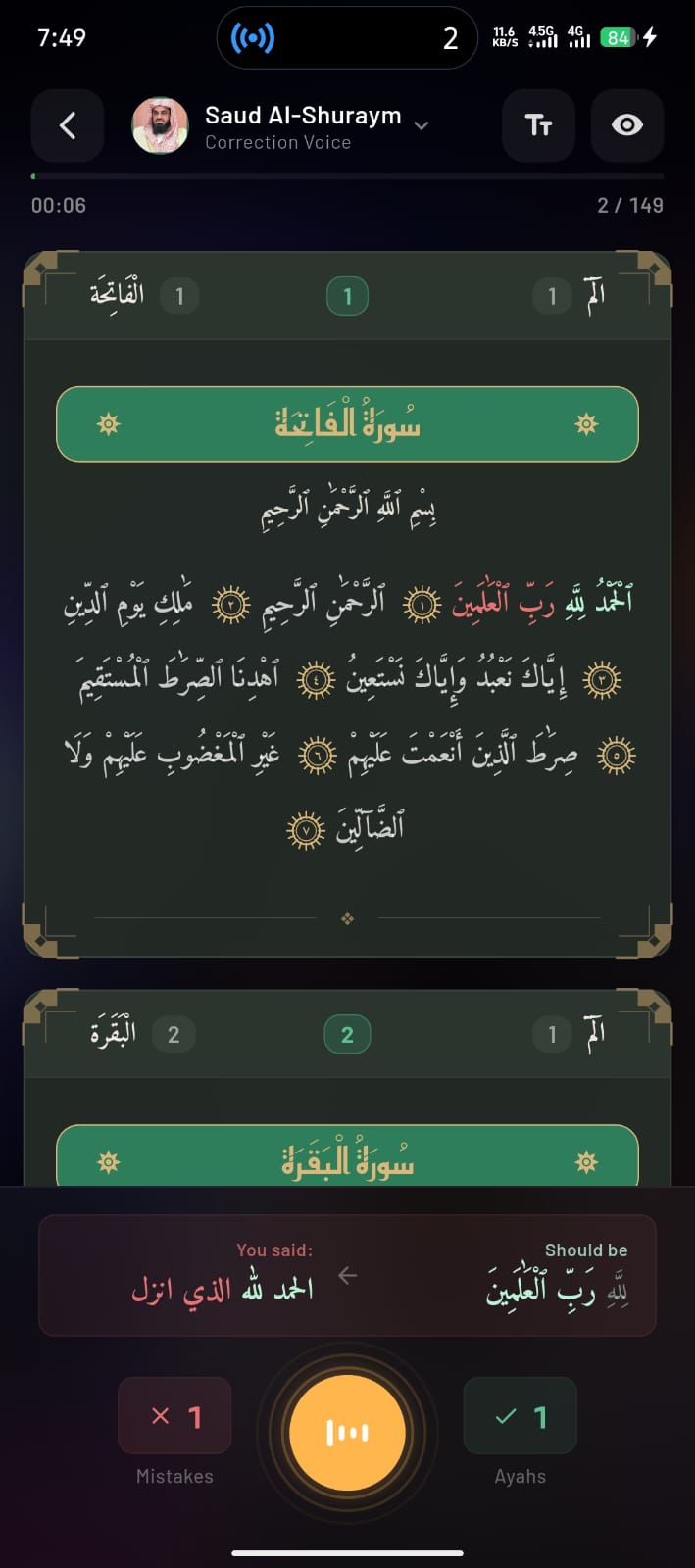
This is one of the reasons we built Hufaaz. As you recite out loud, it catches the exact word you slip on and plays it back correctly in your chosen Qari's voice — so you hear the correct pronunciation the moment you drift, and you reinforce the right version instead of a mistake. It works alongside a tajweed teacher, not instead of one.
Common beginner mistakes
- Rushing. Speed before accuracy bakes in errors. Slow, measured recitation is the instruction and the method.
- Learning only from books. Tajweed is oral; theory without a teacher's ear leaves errors undetected.
- Skipping the Qaida stage. Jumping to the Qur'an before the letters are solid guarantees pronunciation problems.
- Memorizing before fixing recitation. The single most costly mistake for future huffaz.
- Confusing similar letters. The similar-sounding letters need deliberate drilling of their makharij; they won't sort themselves out.
- Practising inconsistently. A little every day beats an occasional long session — the tongue learns through repetition.
Getting this right early costs time you may be tempted to save — but it is small next to how long hifz takes overall, and it prevents re-learning later.
Frequently asked questions
Is tajweed obligatory? Reciting the Qur'an in a way that preserves its correct pronunciation and avoids clear errors is required, since mistakes can change meaning. Learning the formal science to a high level is strongly encouraged for every Muslim who recites, and the more you learn, the better you protect the recitation.
Can I learn tajweed on my own? You can learn the theory alone, but the practical application needs a teacher's ear to catch errors you can't hear in yourself. Combine self-study and listening with regular correction from someone qualified.
How long does it take to learn tajweed? The core rules can be covered in a matter of months with consistent study, but fluency and accuracy develop over longer practice. As with hifz, consistency matters more than speed.
Do I need to learn tajweed before starting hifz? Ideally yes. Getting your recitation correct first prevents you from memorizing mistakes — which are much harder to remove later than to avoid at the start.
What is the Noorani Qaida? A foundational primer that teaches the Arabic letters, their sounds, and basic combinations before moving to the Qur'an itself. It's the standard first step for building correct pronunciation.
Will listening to Qaris improve my tajweed? Yes — attentive, repeated listening and imitation transfers much of tajweed by ear, often before you grasp the theory. Choose a skilled reciter and imitate closely.
Conclusion
Tajweed is not a barrier standing between you and the Qur'an — it is the doorway to reciting it as it was revealed. Start with the letters and their articulation, learn the core rules a step at a time, recite slowly, listen and imitate, and get corrected regularly. And if memorization is your goal, get your recitation right before you begin, so every page you memorize is a page memorized correctly.
If you want your recitation checked as you practise — catching slips in your chosen Qari's voice — Hufaaz is free on Google Play. Pair it with a qualified teacher and build a foundation that lasts.